
Pectus Excavatum problems in Later life?
A common concern among those with Pectus Excavatum is the uncertainty as to whether or not Pectus Excavatum can cause problems in later life. We have written this article to clear up any concerns patients might have about Pectus Excavatum getting worse and covers the main issues that occur with the condition as we age.
The progression of Pectus Excavatum with age
Firstly, it’s important to remember that the depth of the Pectus Excavatum deformity doesn’t get worse after the patient has finished growing. The indent typically grows in severity at the start of the adolescent growth spurt and may continue until the chest wall has finished growing. After this, the cartilage of the chest begins to harden and fix in place. Any problems associated with Pectus Excavatum in later life will be secondary to the condition, such as breathing issues, exercise intolerance, heart function and posture.
Common problems caused by Pectus Excavatum
Cardiovascular effects
Pectus Excavatum patients often experience cardiovascular side effects such as heart palpitations and poor stamina. These physical symptoms are caused by the compression of the heart due to the sternum’s inward position. Whilst the position of the sternum is unlikely to changed in adulthood, cardiovascular performance by itself usually decreases with age, which can lead to a worsening of the symptoms associated with Pectus.
A patient who had only mildly reduced stamina and infrequent heart palpitations as a young adult may start to experience more severe symptoms as they age, although the Pectus Excavatum deformity hasn’t changed.
These age-related changes can be greatly reduced by maintaining a heart-healthy diet and sticking to a solid exercise regimen that includes cardiovascular exercises. The Vacuum Bell Device is also a highly useful tool in providing cardiovascular improvements for Pectus Excavatum patients who wish to avoid surgery.
Respiratory issues: shortness of breath & reduced exercise tolerance
As is the case with cardiovascular function, respiratory performance often tends to decrease as we get older. This may cause problems with Pectus Excavatum later in life, as lung function is often already reduced, even in young patients.
Whilst it’s already well know that the chest-wall gets stiffer as we age, scientific evidence now shows that the lungs too lose elasticity in older age. When combine with a stiffer chest-wall and weaker diaphragm muscles, the overall respiratory ability is reduced in comparison to a younger person. This age-related issue can contribute to problems related to Pectus Excavatum in later life.
The following chart shows some statistics on overall respiratory function in older patients.
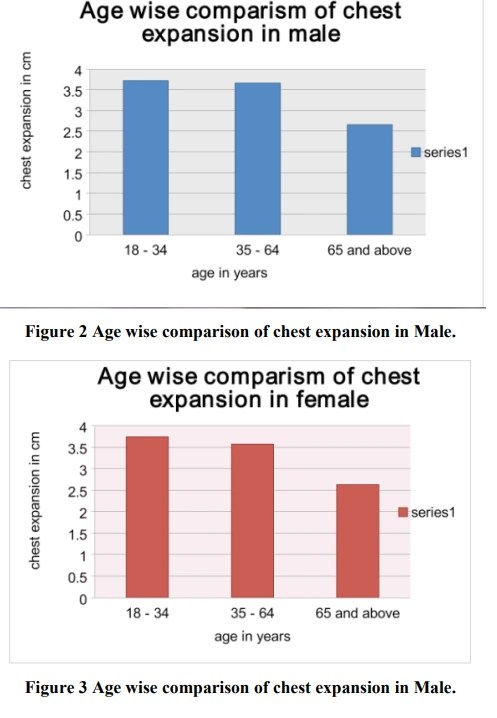
Starting and maintaining a consistent routine of cardiovascular exercise is important to retain the strength of the diaphragm muscles and the elasticity of the lungs well into older age. Yet, the issue of increased chest-wall stiffness and its impact on chest expansion can’t be addressed by exercise alone.
If surgery to treat Pectus Excavatum is unavailable or undesired, the Vacuum Bell Device for Pectus Excavatum is a highly effective tool to maintain the elasticity of the chest wall, as well as provide relief from cardiovascular and pulmonary symptoms associated with Pectus Excavatum.
The Vacuum Bell works by creating a negative pressure over the chest, which pulls the sternum up to a normal position. Whilst the sternum usually sinks back in after a day or two, repeated moving back and forth by Vacuum Bell use will soften the chest wall and avoid age-related stiffness. The device also provides relief from most of the symptoms associated with Pectus Excavatum, as it can lift the sternum off the heart & lungs, albeit often only temporarily in older patients.
Whilst often not providing a permanent fix for older patients, the Vacuum Bell is still highly effective at providing symptom-relief for individuals who wish to avoid surgery.
Quality of life concerns
Apart from functional issues such as breathing and heart function, there are other negative symptoms associated with Pectus Excavatum that can impact quality of life. These issues are mostly postural related and often associated with pectus, such as rib-flaring, hunched posture, hyper lordosis and pot-belly. The impact of these issues can have a negative effect on body image and greatly impact an individual’s psychological health throughout their life.
Apart from surgery for Pectus Excavatum, a good muscle-building exercise program combined with postural exercises is the most practical way to address these issues and maintain a positive body-image throughout life.
Treatment overview for adults
The Nuss Procedure
The Nuss procedure for Pectus Excavatum is the most effective surgical treatment method for most patients with Pectus Excavatum. The surgery was previously available only to younger patients, as it was thought the chest cartilage in older patients was too stiff for the procedure. These days, however, most surgeons who have experience with he procedure are willing to provide it to older patients (40+), with outcomes matching those seen in younger patients.
Although the Nuss Procedure is a highly effective method for treating Pectus Excavatum, it is painful and often involves a long recovery period. Some patients, especially those with milder cases, may wish to opt for non-surgical treatment methods.
Non-surgical treatments
The best non-surgical methods to avoid progression of symptoms with Pectus Excavatum involve physical exercise and Vacuum Bell Therapy. Cardiovascular exercise is the most effective method to maintain the function of the heart and lungs and avoid a worsening of the already negative effect that Pectus Excavatum has on those organs.
As well as functional improvements, self-esteem benefits can also be achieved with exercises that build muscle and improve posture. A routine of muscle-building and postural exercises can help reduce the appearance of the indent, as well as rude or eliminate associated issues such as rib-flare, bad posture, hyper-lordosis and pot-belly.
The Vacuum Bell helps to treat Pectus Excavatum by lifting the breast-bone off the heart and lungs, as well as reducing the stiffness of the chest-wall as we age. Combined with exercise, it is the most effective non-surgical method at relieving Pectus Excavatum symptoms.
Conclusion
Whilst Pectus Excavatum itself doesn’t worsen with age, the symptoms often associated with it can grow worse later in life. Symptoms such as reduced exercise tolerance and cardiovascular symptoms can grow worse due to age-relaed decline in the function of the heart & lungs, as well as an increase in chest-wall stiffness.
However, there are still effective ways to manage the condition in later life. Surgical options such as the Nuss Procedure remain highly successful for patients, even in older age. Non-surgical treatments are also effective at reducing the progression of Pectus Excavatum symptoms. Treatments such as cardiovascular exercise and Vacuum Bell Therapy provide effective methods to maintain heart & lung function, as well as reverse the stiffening of the chest wall. Both surgical and non-invasive treatments provide effective methods for patients to enjoy a long and healthy life.


 pectus science blog